
💡 DID YOU KNOW?
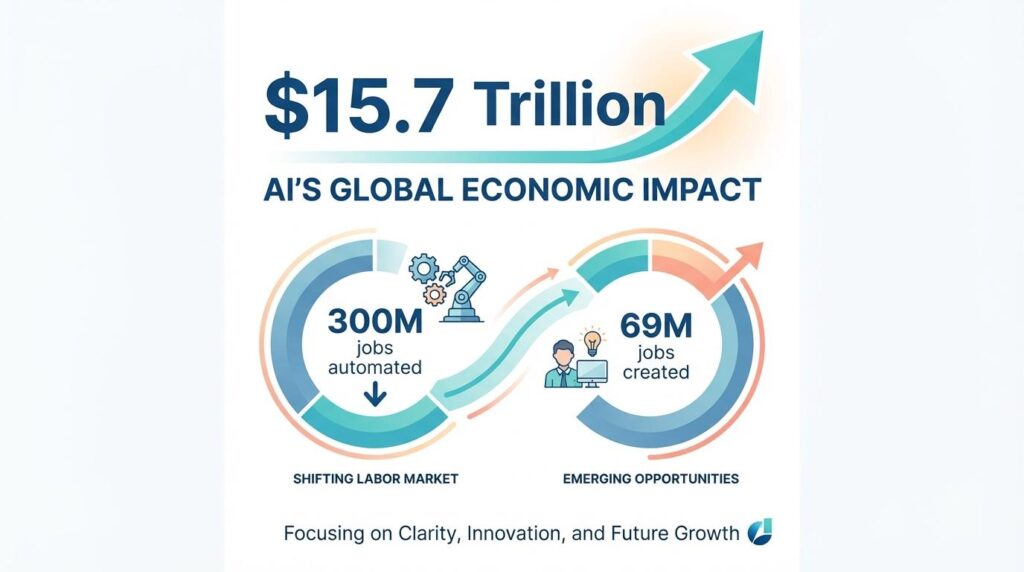
Goldman Sachs, a leading investment bank based in the United States, estimates that generative AI could automate 300 million full-time jobs, while the World Economic Forum forecasts 69 million new jobs by 2028.
2. Winners and Losers: Identifying Risks and Growth Areas
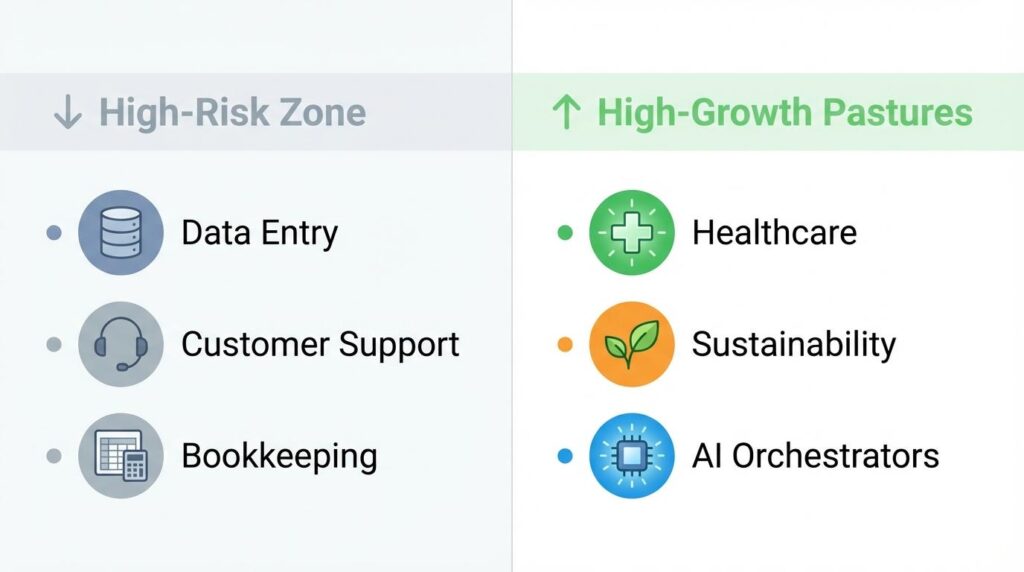
Roles are categorized based on their susceptibility to AI automation and their potential for growth. Not all sectors are affected equally.
3. Augmentation over Replacement: The “Co-Pilot” Era
The most likely future is one where AI supports human work, shifting the focus from doing tasks to guiding them. We are entering a time where AI acts like a digital co-pilot for professionals.
“The 80/20 Rule of Productivity: AI will automate the drudge work (80%), allowing workers to focus on creative judgment and emotional intelligence (20%).”
– McKinsey Global Institute

This shift is already creating high-paying roles. For example, prompt engineering can earn over $300,000 a year, focusing more on logical thinking and communication than just coding skills.
4. Lessons from History: The “Luddite” and “Lump of Labor” Fallacies
The “Luddite Fallacy” and the “Lump of Labor Fallacy” both assume that technology reduces the number of jobs. The Luddite Fallacy says that new technology will permanently take away jobs, while the Lump of Labor Fallacy believes that there is only a fixed amount of work in the economy. However, history shows otherwise. As technology improves efficiency, some jobs may disappear, but new and better-paying jobs are created in their place.
THE ATM Case Study
When ATMs were introduced in late 1960s, many predicted the death of the bank teller. Instead, operating costs dropped, more branches opened, and tellers evolved into high-value relationship manager roles, where they talk to customers, understand their needs, and provide financial guidance.